

Is your baby sleeping safely? Watch this short video to learn more.
The Meigs County Health Department is dedicated to keeping sleeping babies safe. If you cannot afford a crib or Pack ‘N Play where you can put your baby Alone, on their Back, in their Crib, contact us at 740-992-6626 to check your eligibility for assistance or if you have questions about making sure your baby is sleeping safely.
Learn more at:
 Nalaxone Project DAWN Training Video(click for video link)
 Now Offering Fentanyl Test Strips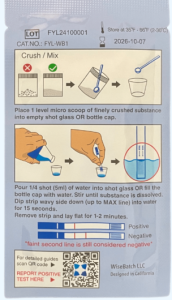
Education and Instruction (Click for Link)
CMH, the program for Complex Medical Help previously known as Children with Medical Handicaps, is a health care program funded in part by the Ohio Department of Health. CMH Public Health Nurses (PHN) link families of children and adults up to age 26 with special health care needs to a network of quality providers and help families obtain payment for the services their child/adult needs.

Many families do not think their child’s medical condition qualifies for CMH. The Children with Medical Handicaps program includes a lot of common disorders such as:
Hearing Loss, Hemophilia, Juvenile Arthritis, Metabolic Disorders, Scoliosis, Severe Vision Disorders, Sickle Cell Disease, Spina Bifida, AIDS, Cancer, Cerebral Palsy, Chronic lung disease, Cleft lip/Palate, Congenital Heart disease, Cystic Fibrosis, Diabetes, and many more.
Those who are:
CMH has three programs to help children with special health care needs. All service must be given by CMH approved providers.
Children can receive services for up to six months, from CMH-approved providers, to rule out or diagnose a special health care need or establish a plan of treatment. These services may include:
• Tests and X-rays
• Visits to CMH-approved doctors
• Up to five days in the hospital
• Public health nursing services
• Therapy evaluations
Financial eligibility is not required for the Diagnostic Program.
Children are evaluated and approved yearly by a managing CMH physician. Both medical and financial eligibility are required for the Treatment Program. Treatment services may include:
• Laboratory tests and X-rays
• Physicians visits
• Prescription medications
• Therapies
• Medical equipment and supplies
• Surgeries and hospitalizations
• Service coordination
• Public health nurse services
All services must be related to the child’s eligible condition. If the child remains eligible, services may be renewed each year until the child reaches age 21.
Service Coordination Service Coordination helps families locate and coordinate services for their child. This is a limited program available to children, with specific conditions, who are seen by a team of providers at hospitals approved by CMH for service coordination.
The child’s CMH-approved doctor (M.D. or D.O.) sends a Medical Application Form(click for link) to CMH. Public health nurses can start the application process by referring families to CMH-approved doctors. The parent or legal guardian (or client, if 18 years of age or older) must sign the release of information and consent on the application form before BCMH can act on the application.
Contact your local CMH Public Health Nurse:
Angie Rosler BSN, RN – Phone: (740) 992-6626 ext: 1075 email: angella.rosler@meigs-health.com
Please visit the Ohio Department of Health website(click for link) for forms and contact Angie Rosler BSN, RN for local providers!
Ohio Department of Health website explaining what the Complex Medical Help program is CMH(click for link)
The Meigs County Health Department hosts the OSU Mobile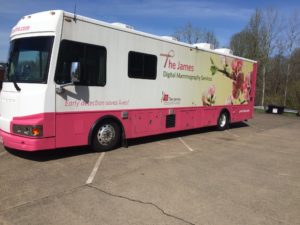 Mammography unit four times per year.
Screening mammograms are provided for:
Commercial insurance and Medicaid is accepted. Funding is available for un/underinsured, income eligible ladies. For ladies who self-pay, the cost is $135 on the day of service. Contact Courtney Midkiff at 740-992-6626 to schedule an appointment.
Smoking causes more than 480,000 deaths each year in the United States and more than 6 million deaths worldwide. That’s more than HIV, illegal drug use, alcohol use, motor vehicle accidents, and firearm incidents combined. More than 10 times as many US citizens have died prematurely from cigarette smoking than have died in all of the wars fought in the United States during its history. On average smokers die 10 years earlier than non-smokers.
Smoking increases the risk of all types of cancers, heart disease, and respiratory disease. It also can make it difficult for a woman to become pregnant, and can decrease a man’s sperm count. In infants of mothers who smoke during pregnancy, it can cause low birth weight, premature birth, Sudden Infant Death Syndrome (SIDS), ectopic pregnancy, orofacial cleft, and miscarriage.
It causes decreased bone density in women. Smoking causes tooth loss, and cataracts, and is a cause of type ll diabetes. Smoking affects every part of the body, decreases your immune system, and causes rheumatoid arthritis.
Quitting smoking cuts your cardiovascular risks. After just one year of not smoking, your risk of a heart attack is cut dramatically. After 2 to 5 years, your risk of stroke could fall to about that of a nonsmoker. If you quit smoking, your risks for cancers of the mouth, throat, esophagus, and bladder is cut in half after 5 years. Ten years after you quit smoking, your risk of lung cancer is cut in half.
You can see that smoking has many negative effects on your health, in turn; quitting smoking has just as many positive effects on your health. If you are thinking about quitting but just feel that you can’t do it alone, call The Ohio Tobacco Quit Line (click here for link) at 1-800-QUIT-NOW or 1-800-784-8669. Callers to the Ohio Tobacco Quit Line are five times more likely to successfully quit smoking than people who quit cold turkey.
https://smokefree.gov/quit-vaping-resources
https://smokefree.gov/tools-tips/quitstart


